Saturday, February 23, 2013

Star Wars According to William Blake


“I must Create a System or be enslav’d by another Man’s.
I will not Reason & Compare: my business is to Create.”


“Eternity is in love with the productions of Time.”


“A fool sees not the same tree that a wise man sees.”


“When Nations grow Old, The Arts grow Cold
And Commerce settles on every tree.”


“If the fool would persist in his folly he would become wise.”


“Excess in Youth is necessary to Life.”


“I have sought for a joy without pain,
For a solid without fluctuation – “


“Prisons are built with stones of Law
Brothels with bricks of Religion.”


“If the Sun & Moon should Doubt
They’d immediately go out.”


“Tiger! Tiger! burning bright
In the forests of the night,
What immortal hand or eye
Could frame thy fearful symmetry?”


"And o’er the dark desarts of Urizen
Fires pour thro’ the void on all sides
On Urizen’s self-begotten armies.”


“When the green woods laugh with the voices of joy,
And the dimpling stream runs laughing by;
When the air does laugh with our merry wit,
And the green hill laughs with the noise of it.”


“And the gates of this chapel were shut,
And ‘Thou shalt not’ writ over the door.”
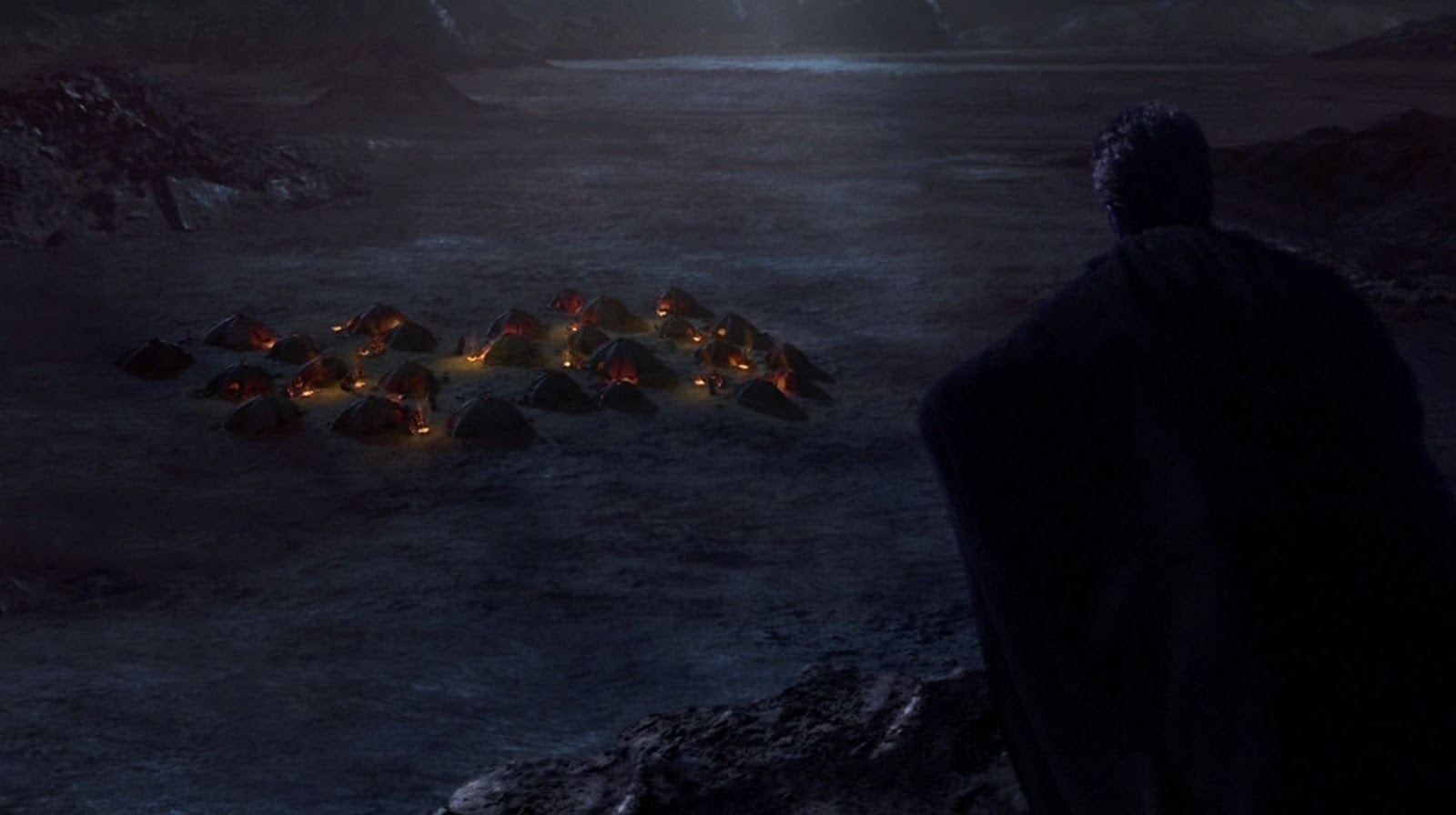


“I went forth. I hid myself in black clouds of my wrath.
I call’d the stars around my feet in the night of councils dark.
The stars threw down their spears & fled naked away.
We fell.”


“And was Jerusalem builded here,
Among these dark Satanic mills?”


“They forged the sword, the chariot of war, the battle ax,
The trumpet fitted to the battle, and the flute of summer
And all the arts of life they changed into the arts of death.”


“Love seeketh not itself to please,
Nor for itself hath any care,
But for another it gives its ease,
And builds a Heaven in Hell’s despair.”


“One command, one joy, one desire,
One curse, one weight, one measure
One King, one God, one Law.”


“Thy friendship oft has made my heart to ake:
Do be my Enemy for Friendship’s sake.”


“A Machine is not a Man nor a Work of Art
Is Destructive of Humanity and of Art
the word Machination.”


“My Spectre around me night & day
Like a Wild beast guards my way
My emanation far within
Weeps incessantly for my sin.”


“Without contraries is no progression. Attraction and Repulsion,
Reason and Energy, Love and Hate, are necessary to Human Existence.”


“Pitying I wept to see the woe
that Love & Beauty undergo,
To be consumed in burning Fires
And in ungratified desires,
And in tears cloth’d Night and Day
Melted all my soul away.”


"The Angel that presided ov'er my birth
Said, 'Little creature, form'd of Joy and Mirth,
Go love without the help of any Thing on Earth'."


“Is this a holy thing to see
In a rich and fruitful land,
Babes reduced to misery,
Fed with cold and usurous hand?”


“For man has closed himself up, till he sees all
things thro’ narrow chinks of his cavern.”


“The iron hand crushd the Tyrant’s head
And became a Tyrant in his Stead.”


“And their sun does never shine,
And their fields are bleak & bare,
And their ways are fill’d with thorns:
It is eternal winter there.”


“No bird soars too high, if he soars with his own wings.”


“Energy is Eternal Delight.”


“I will not cease from Mental Fight
Nor shall my Sword sleep in my hand:
Til we have built Jerusalem
In England’s green and pleasant Land.”


“And wherever he wander’d in sorrows
Upon the aged heavens
A cold shadow follow’d behind him
Like a spider’s web, moist, cold and dim – “


“Energy is the only life, and is from the Body.”


“Abstinence sows sand all over
The ruddy limbs & flaming hair
But Desire gratified
Plants fruits of life and beauty there.”


“A man’s worst enemies are those of his own house and family.”


“O why was I born with a different face?
Why was I not born like the rest of my race?”


“I am not ashamed, afraid, or averse to tell you What Ought
to be Told. That I am under the direction of Messengers
from Heaven, Daily and Nightly.”


“The nakedness of woman is the work of God.”


“Can I see a falling tear,
And not feel my sorrow’s share?
Can a father see his child
Weep, nor be with sorrow fill’d?”


“Every Man is in his Spectres Power
Until the arrival of that Hour
When his humanity awake
And cast his spectre into a Lake.”


“Empire is no more! And now the lion and the wolf shall cease.”


“He who binds himself to a joy
Does the winged life destroy;


He who kisses the joy as it flies
Lives in eternity’s sunrise.”


Author’s note – This one has been in my mind a long time. William Blake was the poet who initiated English Romanticism, but he was also the first to create his own personal, independent myths. Joseph Campbell used to call this the age of Creative Mythology, where the stories were being crafted by the individual, from the bottom up rather than from the top down. It all started with this visionary poet. The last post about Camille Paglia mentioned Blake, and if you enjoyed this, you might also enjoy the Saga in a Paragraph.

Tuesday, February 12, 2013

Heretic of the Year


This past year has seen the coming of many things that have impacted the landscape which surrounds the Star Wars saga. It has been a year ripe with heresy, one of the biggest being Lucasfilm’s merger with Disney and, even more importantly, the announcement of Episodes VII, VIII, and IX. 


However, there was one bit of news that found itself largely buried in all the promise, pitfalls, and potentials of the perpetually-in-motion future. It was a proclamation big and bold, one sure to make veins pop and nostrils flare. As such, it ushered in the creation of The Star Wars Heresies’ first ever Heretic of the Year Award.


The first thing I ever read by Camille Paglia, a University Professor of Humanities and Media Studies at the University of the Arts in Philadelphia, was select entries from Break, Blow, Burn. This was a lucid, soulful, and spirited trek through poetry, with fascinating insights into the relationship between words and reality, and how one often shapes the other.


Most important to me, Paglia understood in a deep and meaningful way the mythopoetic works of William Blake, having trained under the watchful literary eye of Harold Bloom and others. And while that somewhat cantankerous critic has no stomach for popular culture, she sings its praises well when praise is called for. And as noted earlier on this blog, if one understands the mythopoetic works of Blake, one understands that mythopoetic long ago, far away galaxy.


Released as a stunning hardcover last year, her Glittering Images: A Journey through Art from Egypt to Star Wars is now available in bookstores everywhere. With aphorisms worthy of Yoda, Paglia describes in the introduction how “we must relearn to see,” because “Looking at art requires stillness and receptivity, which realign our senses and produce a magical tranquility.” It seems worthwhile to point out that in R.A. Salvatore’s novelization of Attack of the Clones, he interestingly speculates that the Force itself is a well-spring of creative inspiration, and that art plays a central role in the meditative exercises of the Jedi. 


This would no doubt please Paglia, who insists that “Art unites the spiritual and material worlds,” not unlike the binding energy of the Force through those wonderful little midichlorian buggers everyone loves so much. With words that could have been spoken by a Jedi Master, she sagely remarks how “A delicate balance must be struck between the visible and invisible worlds” when it comes to the arts. Also like the Force, she sees art as our way of investigating man’s relationship with nature and the universe. 


Such sentiments alone are not nearly enough for Camille Paglia to receive the coveted Heretic of the Year Award. No, it is the culmination of Glittering Images which merits that. In a work which honors the art of Donatello, Titian, Monet, Picasso, Pollock, and many others, she states without hesitation or apology that “film director and digital pioneer George Lucas is the world’s greatest living artist.” She also argues his artistic masterpiece is Episode III, admitting “Nothing I saw in the visual arts of the past thirty years was as daring, beautiful, and emotionally compelling as the spectacular volcano-planet climax of Lucas’ Revenge of the Sith.”


So the greatest artist and work of art, not only in Star Wars but in living memory, is none other than George Lucas and Revenge of the Sith. It’s as if a million prequel haters across the internet cried out in terror, and were suddenly silenced. I should like to point out there is no mention of The Empire Strikes Back anywhere in the last chapter of her book, and certainly no reference whatsoever to Gary Kurtz, whom countless original trilogy fundamentalists no doubt believe should have received the nod (and about whom everyone else not currently wearing Boba Fett underoos neither knows or cares).


“Only one cultural figure had the pioneering boldness and world impact that we associate with the early masters of avant-garde modernism,” Paglia daringly writes, declaring, “George Lucas, an epic filmmaker who turned dazzling new technology into an expressive personal genre.” 


Genuine enthusiasm of Lucas bleeds through the pages, as she outlines the details of his life, from his birth in the small town of Modesto, California, to the office supply store his father wanted him to take over, to his days of drag-racing throughout high school, to the siren song of art that stirred something within him, to his time at USC, and then to his filmmaking career and early works such as THX-1138 and American Graffiti.


The parallels between a first-rate academic like Paglia and a filmmaking visionary such as Lucas are interesting and apparent throughout much of the book. They both have very similar views on the arts and humanities, seeing them as essential to the heartbeat of any given society at any given time. The two also seem to share something of a cyclical view of culture, as is often apparent among those gifted with identifying the patterns weaving throughout life. Paglia tellingly feels that “in an age of alluring, magical machines, a society that forgets art risks losing its soul.” This is a sentiment that has been readily apparent in all of Lucas’ work, dating back to his student films. 


Despite the stubborn and often puzzling refusal to see Star Wars as anything but shallow fodder for popcorn enthusiasts at the local multiplex, Paglia poetically argues that something like even the space battles in the saga “must be regarded as significant works of modern kinetic art whose ancestry is in Marcel Duchamp’s readymades and Alexander Calder’s mobiles.” 


My favorite comparison comes in her analysis of the eight minute space battle over Coruscant at the beginning of Revenge of the Sith. Paglia notes that the exhilarating space duel, “with its dense cloud of stately destroyers, swooping starfighters, and fiendish buzz droids, cuts optical pathways that are as graceful and abstract as the weightless skeins in a drip painting by Jackson Pollock.” Beautiful, and one wonders why current film critics weren’t able to draw such parallels. 


It’s also just impressive that Paglia knows what buzz droids are. After reading her chapter on Sith, it is very obvious that she not only understands the artistic merits of Star Wars, but genuinely enjoys them. She even draws a charming parallel between the Incredible Cross-Sections books and da Vinci’s notebooks with their common obsessive technological detail.


Much as I’ve tried to do, Paglia reads Star Wars as one would an intelligent work of literature, and her experience of it is so much richer as a result. Just as the works of Joseph Campbell endlessly explain, myth is poetry, not prose, and only truly lives and breathes when interpreted as such. She marvels at the “symbolic color scheme” embedded throughout the films, not to mention the “poetically changing weather” so evident in the prequels. 


Highlighting the saga’s remarkable blend of metaphysics, environmentalism, multicultural religion, cyclic view of history, and ties to old biblical movie spectacles, Paglia focuses her final analysis on Revenge of the Sith, particularly the epic duel of Obi-Wan Kenobi and Anakin Skywalker on the fiery world of Mustafar. “Fire provides a sublime elemental poetry here, as water did on the storm-swept planet of Kamino in the prior film, Attack of the Clones,” Paglia explains, adding, “Hell, as in Marlowe, Milton, and Blake, is a psychological state – Anakin’s self-destructive surrender to possessive love and jealous hate.” 


Blake once wrote that all of experience revolves around opposites and contraries, which Paglia sees on full display on Mustafar, particularly in the balletic duel of clashing lightsabers. “It is virtuosic dance theater, a taut pas de deux between battling brothers, convulsed by attraction and repulsion,” she artistically notes, elaborating “Their thrusts, parries, and slashes are like passages of aggressive speech.” 


She also offers full credit for the masterful bits of editing here, particularly the juxtaposition of certain scenes in the last act of the film, such as the birth of the Skywalker twins with the rebirth of their twisted, dark lord father. And far from loathing computer graphics, she is able to embrace digital technology as something like a new color, as Lucas himself has always described it.


A work like Camille Paglia’s Glittering Images should certainly be owned and respected by every Star Wars fan, given a place of honor among all the other books about the saga. As she remarks of George Lucas, “In his epochal six-film Star Wars saga, he fused ancient hero legends from East and West with futuristic science fiction and created characters who have entered the dreams of millions.” 

This line reminds me of one quip from Carrie Fisher at Dragoncon – “Hemmingway never did that.” Too true, but so often forgotten.


Why this should be heresy for so many is unfortunate, particularly those who should be Lucas’ biggest fans. While not bemoaning the merchandising of the films, Paglia does feel that “his phenomenal success as a shrewd businessman has certainly slowed his recognition as a major artist.” This definitely goes hand in hand with the Lucas-Stole-All-My-Money brigade that patrols the Internet. Still, not for a moment does this ever diminish his very real accomplishments, visible for all who have the eyes to see. 


Clearly Paglia does, so deepest congratulations are in order. Our first Heretic of the Year, accept no substitutes. She sums up Lucas in one of the most telling statements I’ve ever read about him, one as controversial as her reputation sometimes is –


“He is a man of machines yet a lover of nature, his wily persona of genial blandness masking one of the most powerful and tenacious minds in contemporary culture.” 


Delightfully delicious heresy such as this comes along all too rarely.